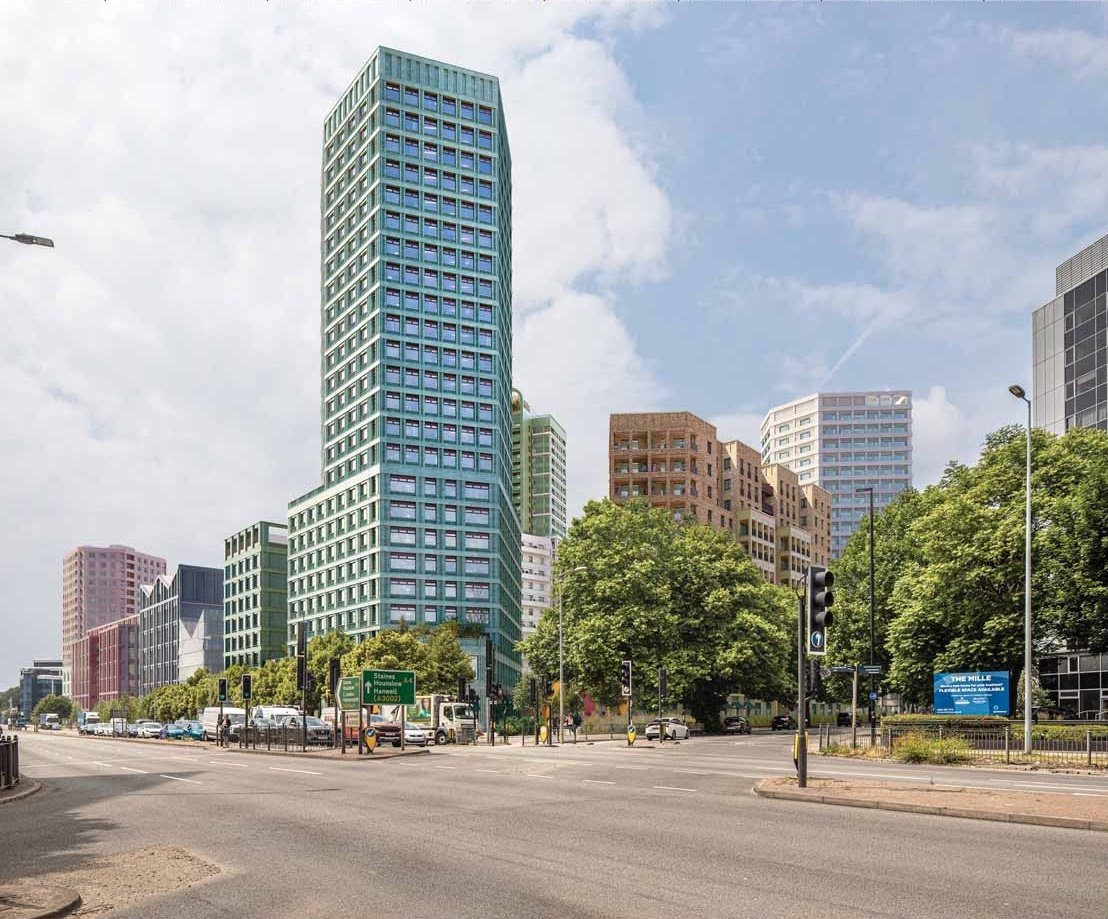
A hybrid planning application for the partial demolition and mixed-use development of the land at 980 Great West Road has been submitted to the local planning authority, the London Borough of Hounslow, which will determine the application. The applicant behind the proposal is Great Western Road Property Company Limited, an entirely owned subsidiary of developer Hadley Property Group.
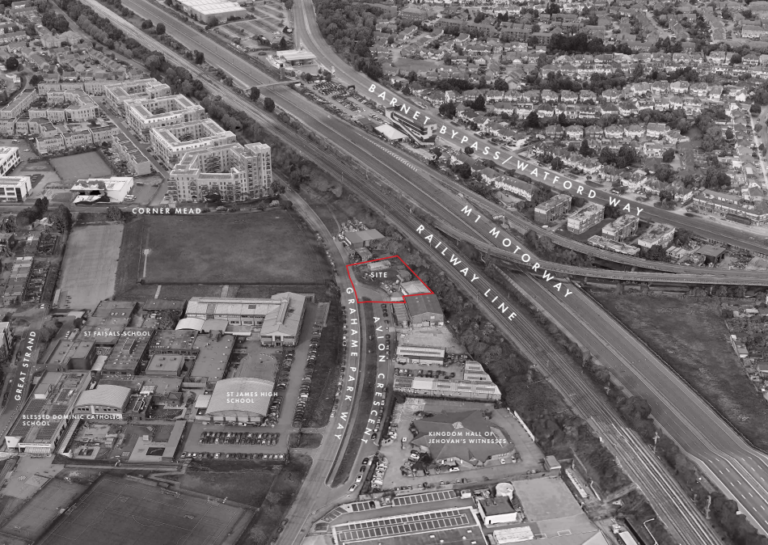
The site, known locally as the former GSK Headquarters, comprises 5.4 hectares of brownfield land with four buildings of varying sizes. However. The largest single building has been categorised as having four components. The building’s height ranges from one to fourteen storeys.
The Proposed Development site is covered by a Site Allocation (118 – Former GSK Site), as stated within the London Borough of Hounslow Local Plan. This allocates the site for a mixed-use development, including residential with affordable housing. The site is also located within the Great West Corridor Opportunity Area
which aims to provide at least 7,500 homes and 14,000 jobs by 2041.
In total, the Site currently has 102,680sqm Gross Internal Area (GIA) of former office and ancillary spaces (albeit only 56,456 sqm was true office space). There are also 1,216 existing car parking spaces on the Site, which are located at the basement level and three separate overground car parking areas located towards the north, east, and west of the Site, including a six-storey standalone multi-storey car park.
The design of the building takes a neo-futurist style of architecture popular at the time of construction, applying a mix of glazing and limestone rainscreen cladding typical of large-scale corporate office campuses constructed between the 1990s and early 2000s.
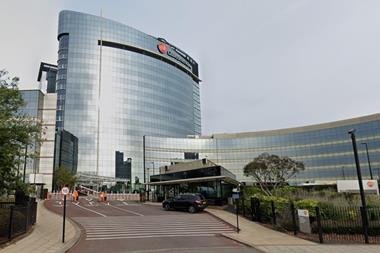
GSK occupied the building from 2001 – 2024. Before 2020, the site was fully occupied; however, following the COVID-19 pandemic, the business experienced a significant culture change with large numbers of employees working remotely. As a result, GSK sought to progress a site disposal strategy to rationalise its overall workspace requirements, which has included relocating parts of the business to other locations across the United Kingdom, as well as moving the majority of its operations to a new, bespoke central London office with a smaller footprint.
Despite a comprehensive period of agency marketing from October 2021 to December 2023, there was no series of formal offers from employment-focused alternative occupiers/developers. The complex was therefore entirely vacated ahead of acquisition by the applicant in September 2024. Hadley acquired the former GSK Headquarters in November 2023.
The site is predominantly vacant and has been stripped out internally, aside from the existing car parks being temporarily used as storage for cars and film production equipment.
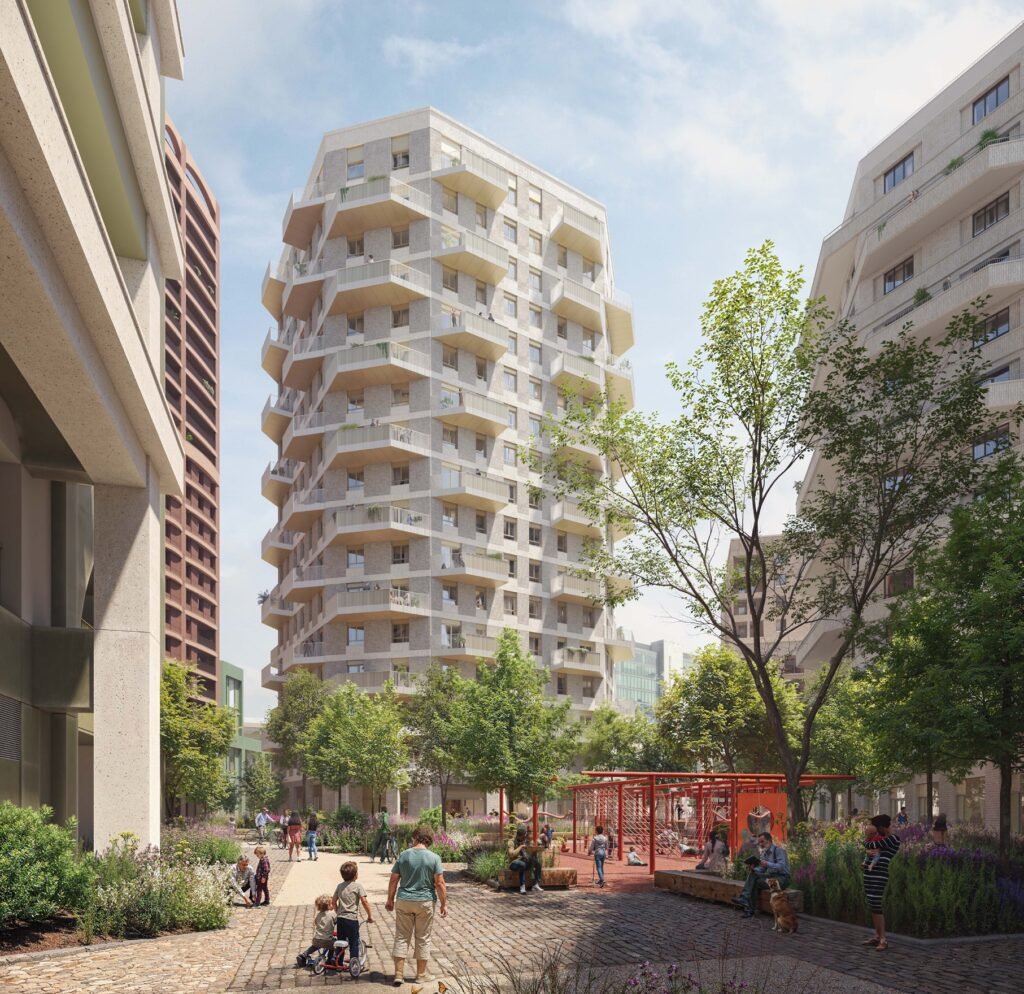
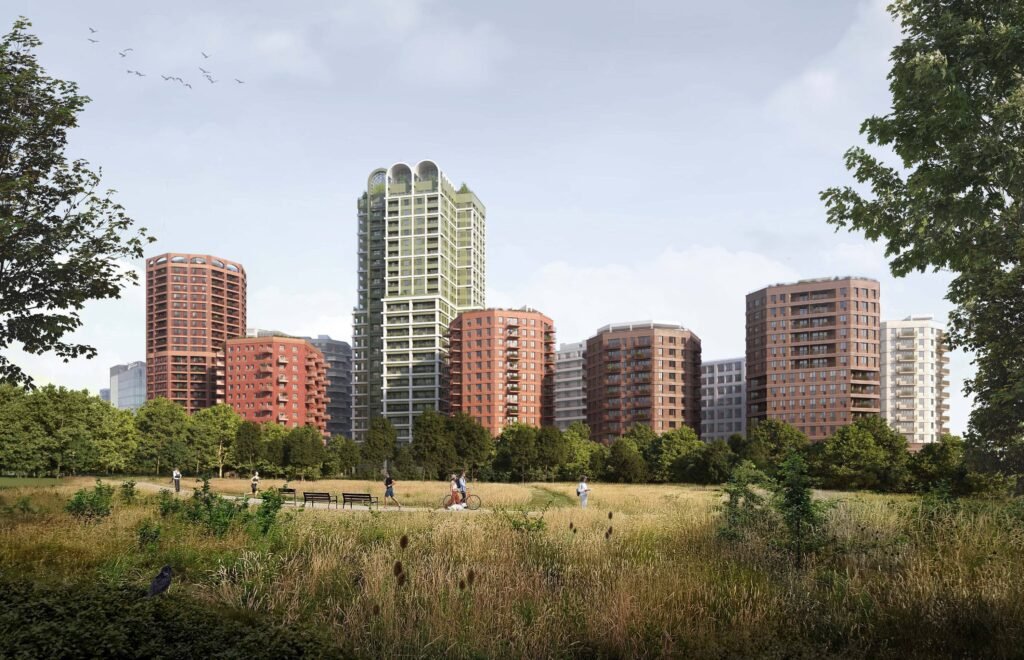
Full planning permission is sought for the detailed element, which covers the western extent of the Site. It comprises the delivery of 761 residential dwellings, including 142 Build to Rent, 506 student bedrooms, and 296 Co-Living rooms, which would be sold to and operated by other specialist operators.
3,277sqm of flexible commercial and community uses, 510sqm of flexible employment floorspace, 2,082sqm to be used for a Green Skills and Enterprise Hub, and all associated soft/hard landscaping, approximately 1.58ha of public realm accesses, parking, and infrastructure.
While the precise number of new homes in the Outline Element of the application will be determined at the reserved matters stage, up to 761 additional new homes may ultimately be delivered. Giving a cumulative delivery of 1,889 homes under the HDT, equivalent to approximately 1.03 years of the current annual housing requirement.
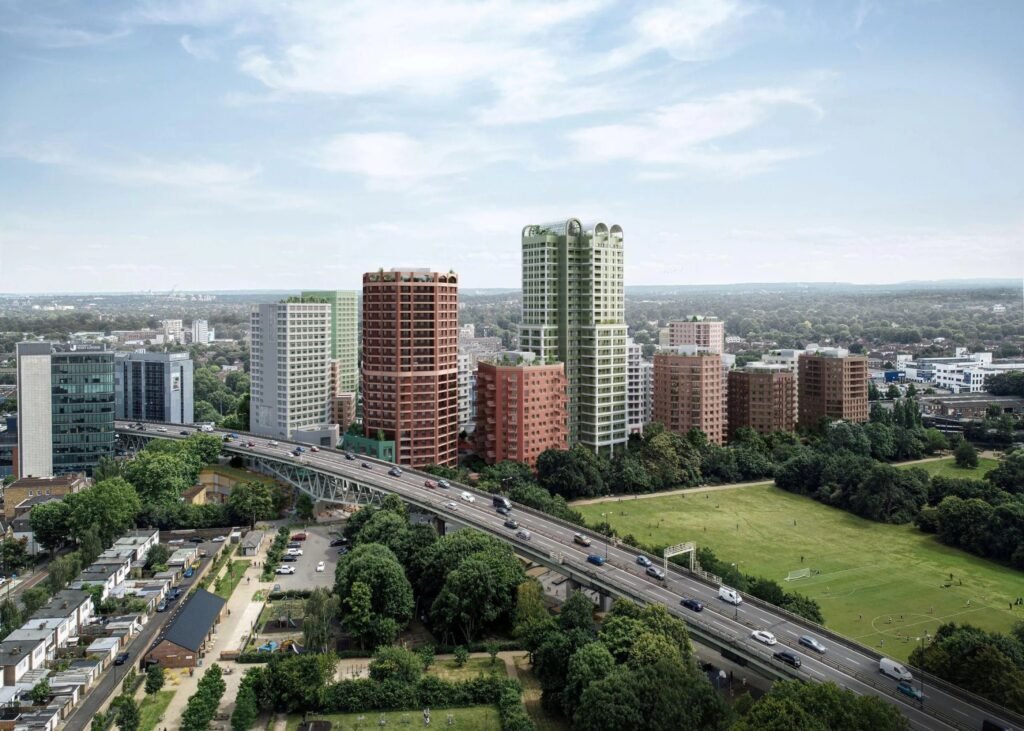
A fully compliant ‘Fast Track’ affordable housing offer with an overall site-wide delivery of no less than 35% by habitable room across all residential tenures (37.5% of C3 homes) being delivered as much-needed affordable homes. The Detailed Element will see the early delivery of 275no. affordable homes (137no. social homes), making a significant contribution to addressing the identified local affordable housing needs.
The applicant has appointed architects Haworth Tompkins as the lead Masterplanner for the site and, with the applicant, to develop an overarching vision and design principles alongside the Illustrative masterplan, which is aligned with the parameter plans. Following this, the applicant then elected to instruct a broader architectural team to develop proposals for each block submitted in detail.
As a significantly sized and well-recognised commercial headquarters, which was constructed less than thirty years ago, it now constitutes a redundant building. As such, it provides an opportunity to embrace circular economy principles in the proposed development, namely through the retention of the existing basement levels.
As a result, a six-stage retention strategy is proposed for the site, which includes: demolition of the existing buildings, retaining specific structural frames and cores where appropriate, reuse of existing basement piled foundations and materials, and selective basement works to increase main building frame capacity. The development is expected to save c.10% of the embodied carbon that would have
been attributed to a fully new build Site.
Through this process, there has been extensive community engagement with the proposals. There has been a total of over 750 individual pieces of feedback given, including but not limited to: more than 150 people attending the in-person consultation events, 70 people attending the co-design sessions, 157 visitors accessing the virtual exhibition, and nearly 94,000 impressions on social media advertising.
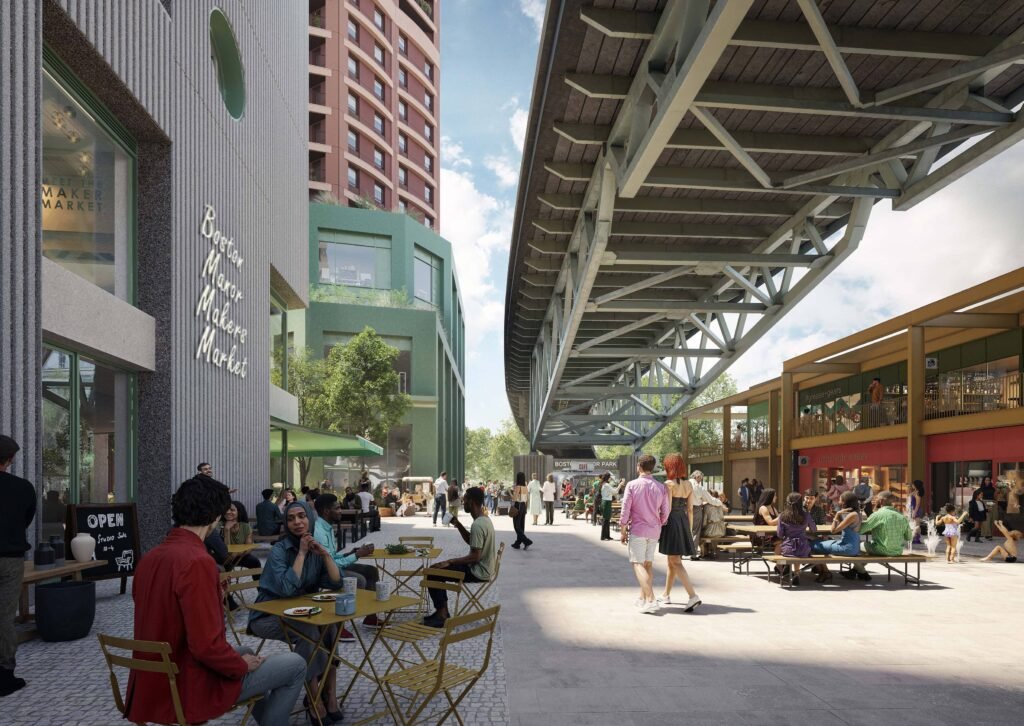
A provision of range of public spaces (including accessible public toilets) within the site will be provided. This includes Boston Place, the Gateway, the Lane, and along the Site’s boundary, i.e., the proposed Underside (under the M4 flyover), which predates the current site conditon as it was built in the 1970s and River Steps, which will open up a new stretch of public realm along the River Brent, rooftop terraces, and other open spaces. In addition, improved pedestrian and cycling accessibility and safety to and from the site will be provided.